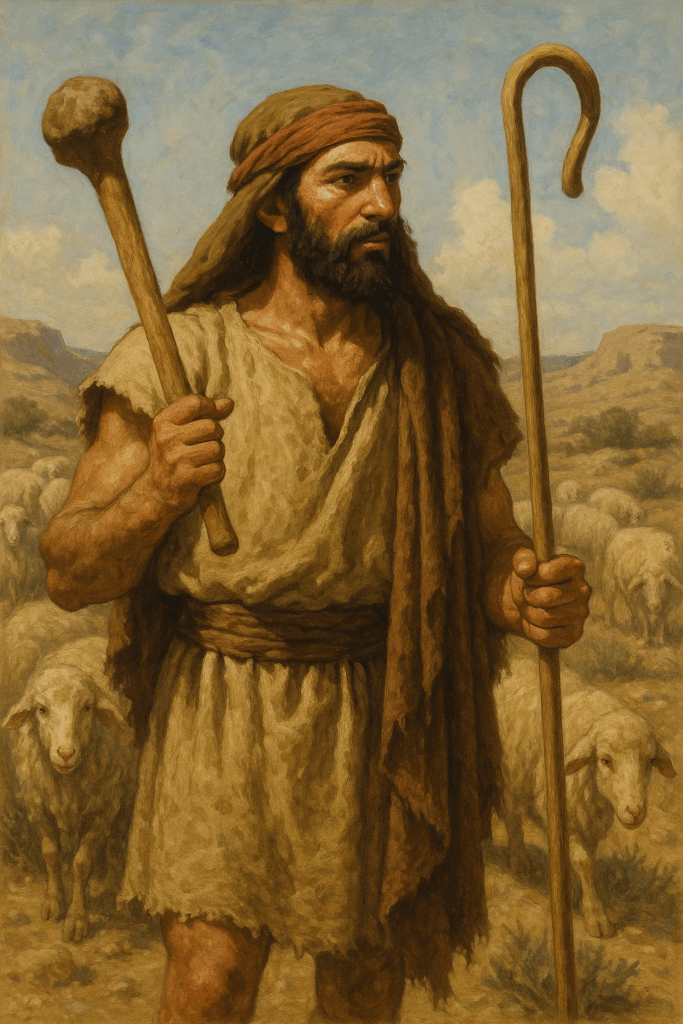
Psalm 23 from a Seeker-Turned-Singers. It is the Shepherd who found me.
The Lord is my Shepherd. Who is yours? Do you say, “It is myself”? That you trust in your own skills, money, or knowledge? Or maybe you say, “I put my trust in my wife, or my business partner, or my job—or even my family”? Maybe you even say, “I put my trust in my Church or my Pastor”? As for me, I know my Shepherd—and I am His sheep.
In 1996, I was bundled up like a package and sent off to spend my August holidays with our late Grandpa at his farm in Kitale. Aside from being actively involved in the circumcision festivities (a story for another day!), my —Auntie, who was my age mate—and I were given the task of herding cattle and sheep.
Now, our late Grandpa was a true agriculturalist. So when I say cattle and sheep, I’m talking about 15 cows and 30 sheep. And guess what? The shepherds were just us—two girls. This is where I pause and laugh because now, years later, I finally understand what it means to be a shepherd.
Did I mention the time we took a detour and climbed a guava tree to hide from the scorching sun—only to lose one sheep? We later found it stuck in a hole in the middle of a maize plantation. Or that time we abandoned the herd to join the circumcision parade and came back to find the cows had broken into Grandpa’s treasured maize? Or the moment we left our lunch neatly tucked in a bush, only to return and find monkeys had feasted on our sweet potatoes and bananas?Ahh, how I laugh now! But even more, I rejoice—because now I can say with certainty: The Lord is my Shepherd!
Why is Psalm 23 so beloved?
It’s the most quoted chapter of the Bible—recited and sung by both believers and unbelievers. Why? Maybe because deep down, everyone understands the story of a shepherd. Or maybe because everyone, at some point, walks through pain and suffering.
But today, let’s go deeper. Let’s learn something fresh about Psalm 23.
This psalm was written by a shepherd who became a king. David knew firsthand the terrain of the Middle East—the rocky paths, the scorching heat, the dangers that came with the calling.
You see, the grazing fields weren’t near home. They were often as far as 20 kilometers away. So the shepherd had to live with the sheep—eating, sleeping, and walking with them day and night. Think of the shepherds watching their flocks at night when Jesus was born (Luke 2:8).
A good shepherd plans the route, goes ahead, and leads the sheep to where he’s already been. That’s their security—he knows the way. And the sheep? They can’t be rushed. If you rush them, they panic. They jump, get disoriented, and do silly things. So the shepherd must be patient and balanced—knowing when they need to move, when they need to rest, when they need to lie down in green pastures during the midday heat.
This reminds me of Song of Solomon 1:7:
“Tell me, you whom I love, where you graze your flock and where you rest your sheep at midday.”
At noon, when the sun scorches, a good shepherd knows it’s time to rest. He also knows the sheep cannot drink from rushing water—they need still waters. Why? Because sheep are fragile. The waves will sweep them away. So he finds calm, safe places. But to get there, he must lead them through gorges—wild valleys where danger lurks. He must be alert and brave, especially in the early morning and late night.
And why all this care?
Because the sheep need balance—between eating and drinking, resting and activity. They need to grow strong. But energy without direction is dangerous. So the shepherd channels it along the narrow paths—not the wide ones the sheep would naturally choose.
Jesus said in John 10:27:
“My sheep hear my voice, and I know them, and they follow me.”
The tracks of righteousness are narrow. But the shepherd leads them—not just for their good, but for His name’s sake. His reputation is at stake. If one sheep goes missing, it reflects on Him.
Psalm 23 is not for goats—it’s for sheep
It begins, “The LORD is my Shepherd.” Not just any lord. LORD in all caps—YHWH—the covenant God of Israel.
Until a man knows the God of Abraham, Isaac, and Jacob—the God of the cross—he cannot truly claim this psalm. Verse 1 is the condition for everything that follows.
A trusting sheep places its entire future in the hands of one person.
Two things give that sheep courage:
The rod – like Nehemiah’s weapon. It’s a cudgel—a blunt club used to strike predators that try to snatch a sheep. It’s close-range, personal, protective.
The staff – the shepherd’s crook. With it, he gently hooks a wandering sheep and draws it back into safety.
Yes, the Lord’s discipline is my security.
Before you claim Psalm 23, you must first pass through Psalm 22.
“They pierced my hands and feet… they divide my garments among them…” (Psalm 22)
This is the psalm of the Cross. It is raw, painful, and prophetic. And from it comes the call of salvation.
“The afflicted shall eat and be satisfied; those who seek him shall praise the Lord!” (Psalm 22:26)
Psalm 22 is for the seekers. And seekers, when they find the Shepherd, become singers. Psalm 23 is for the singers—those who have found the Shepherd and follow His voice.
So I ask you again: Who is your Shepherd?
Before you wear the crown of Psalm 24, you must first kneel at the cross of Psalm 22, and be led by the crook of Psalm 23. You cannot walk in the confidence of “I shall not want” if you’re still wandering in your own wisdom.
But for those who trust Him…
“Surely goodness and mercy shall follow me all the days of my life, and I will dwell in the house of the LORD forever.”
Goodness—His generosity, always near and always giving.
Mercy—His loyal love, sticking with me through thick and thin.
The Great God stooped low to take care of me. Can you feel it? Can you see it?
Yes—The Lord is my Shepherd.
Who is yours